
Stop Mistaking Convenience for Freedom: Having Nothing Is The Ultimate Act of Self-Care
Written by: Sini Hietaharju,
Master of Wellness Tourism Research, RYT-500 Yoga Teacher & Founder of Slow Travel Repeat
Order the
SLOW TRAVEL REPEAT
magazine
Slow reflections for the mind.
Travel guides for the soul.
Repeat practices for the body.
Ordered by 250+ readers,
free forever for orders made
before 30.9.2026
This article is part of our Slow Living Series:
Guides and reflections on slowing down, redefining wellness, and finding freedom in less.
The World's Greatest Illusion
We are told that more is better. More services, more options, more connectivity. That a life with everything at our fingertips is the pinnacle of human achievement.
But what if the opposite is true?
What if the constant availability of services – the ability to order food, stream entertainment, and reach anyone instantly – is not freedom at all, but a carefully constructed distraction?
A system designed to keep us busy, comfortable, and dependent.
The modern world has sold us a beautiful lie: that convenience equals freedom.
In reality, it often equals surrender. And not the good kind of surrendering where you let go of long-term stress. Surrender of our resilience. Surrender of our attention. Surrender of our ability to be still with ourselves.
Convenience offers immediate physical ease and time-saving, while freedom represents the power to choose, act, and think independently.
This is not an anti‑progress manifesto. It is an invitation to question what we have been told. To step outside the bubble of convenience and discover what remains when all the noise falls away and you reclaim your autonomy.
Content
The Hidden Cost of Constant Availability
Every service we use has a price. Not just the monetary one, but the invisible one.
Our attention: The endless notifications, the constant choice, the pressure to respond. Our minds have become crowded spaces where silence is a luxury we cannot afford.
Our resilience: When everything can be ordered, fixed, or replaced, we lose the ability to cope with discomfort. We become soft. Impatient. Afraid of the smallest inconvenience.
Our self‑awareness: When every empty moment can be filled with entertainment, we never learn to sit with ourselves. We never learn to tolerate silence, boredom, or our own thoughts.
This is not freedom. This is a golden cage.
The Psychological Weight of Constant Connectivity
We have been told that connection is good. That being always reachable is a sign of care and responsibility.
But there is a cost.
The constant hum of notifications keeps our nervous systems in a state of low‑grade alert. We are never fully relaxed. Never fully present. Always waiting for the next demand.
This is not connection. It is a slow erosion of our peace. And it is the price we pay for being always "on."
The Economics of Distraction
There is an economic system that profits from our inability to be still. Every minute of our attention is a product. Every moment of discomfort is an opportunity to sell us something – a subscription, a service, a quick fix.
Capitalism has perfected the art of making us feel incomplete. If we are happy with what we have, we do not buy. If we are comfortable in our own company, we do not consume. If we are present in our own lives, we do not scroll.
This is not a conspiracy. It is simply how the system operates. Growth requires discontent. Convenience creates dependency. And dependency is profitable.
You may also want to read:
Social Media is the Plato's Cave: What You Really Lose When You Scroll
The Cost of "Free": How Free Services Monetise Our Attention
Every "free" app operates on a simple exchange: your attention for their profit.
When you scroll through social media, you are not the customer. You are the product. Your attention is packaged and sold to advertisers.
Your data is collected, analysed, and used to predict your behaviour. Your preferences are mapped, your weaknesses identified, and your vulnerabilities exploited.
The more time you spend on these platforms, the more valuable you become – not to yourself, but to the companies that profit from your distraction.
This is not a conspiracy. It is the business model of the modern internet. And it works because we have been convinced that "free" is harmless.
But it is not harmless. It is an exchange. And we are giving away something we cannot get back: our attention, our presence, our peace of mind.
The irony is profound: the services that promise to free us from inconvenience is the very thing that keeps us trapped.
The Danger of Convenience: How Services Create Dependency
The more services we rely on, the less capable we become.
We lose the skills, resilience, and patience that come from doing things ourselves.
We become dependent on systems we do not understand and cannot control.
Worse, we lose the ability to be still. When every moment can be filled with entertainment, we never learn to sit with ourselves. We never learn to tolerate silence, boredom, or our own thoughts.
This is not freedom. This is a prison we have built for ourselves, one service at a time.
The Illusion of Choice: Why More Is Not Always Better
We like to believe that having more choices makes us free.
But research consistently shows that unlimited choice leads to paralysis, anxiety, and dissatisfaction. We spend so much energy deciding that we have none left for living.
In a small town with one grocery store, you buy what is there and move on with your day. In a city with fifty options, you spend half an hour deciding, comparing, and second‑guessing yourself. The result is not better food – it is a depleted mind.
Services do not free us. They fill our lives with decisions that do not matter, leaving us exhausted for the ones that do.
The Freedom of Not Choosing – Letting Go of Decision Fatigue
There is a quiet freedom in having fewer choices. In not having to decide.
When options are limited, you stop weighing, comparing, and second‑guessing. You accept what is. You move on. Your mind is free to focus on what actually matters.
Think about the last time you spent twenty minutes choosing what to watch on Netflix. You were not relaxing – you were deciding. And when you finally made a choice, you were too exhausted to enjoy it.
Now imagine a world where you had three options. Or one. Imagine the relief of simply accepting what is and moving on.
The freedom of not choosing is the freedom to stop optimising. To stop believing that your happiness depends on making the right choice.
Sometimes, the most freeing thing you can do is let someone else decide. Or accept what is already there. Or simply do nothing.
The next time you feel overwhelmed by choice, try this: choose the first option that feels good enough. And then let it go. See how much lighter you feel.
What Remains When Everything Is Stripped Away
Imagine this: you are in a remote cabin. No Wi‑Fi. No restaurants or services. No neighbours. No supermarket. No streaming service. No distractions.
At first, it is uncomfortable. You reach for your phone. You feel a pang of anxiety. What if someone needs you? What if you are missing something?
Then, slowly, something shifts.
You notice the light. The way it moves through the trees. You hear the birds. You feel the ground beneath your feet. Your thoughts slow down. You are no longer reacting to the world – you are simply being in it.
This is the freedom of inaccessibility. Not the freedom to do everything, but the freedom to do nothing. To be unreachable. To be unneeded. To be, for a moment, completely and utterly free from the demands of modern life.
Why Boredom Is Not the Enemy – The Creative Power of Empty Time
We have been taught to fear boredom. To see it as a problem to be solved, a gap to be filled. The moment we feel a flicker of emptiness, we reach for our phones. We scroll. We stream. We consume.
But boredom is not the enemy. It is a doorway.
When we allow ourselves to be bored, we give our minds space to wander. To make connections we would not otherwise make. To hear thoughts that are drowned out by constant stimulation.
Some of the greatest ideas in human history were born in moments of boredom. Not because boredom is magical, but because it creates the conditions for creativity to emerge.
When the mind is not occupied, it begins to play. And play is where innovation lives.
The modern world has stolen boredom from us. It has filled every gap with content, every moment with distraction. And in doing so, it has stolen something precious: the creative power of empty time.
If you want to reclaim your creativity, start by reclaiming your boredom. Sit in silence. Let your mind wander. Do nothing. See what emerges.
The Hard School of Silence
Silence of nature does not negotiate. It does not offer you a faster option or an alternative route. It asks you to meet it on its own terms.
In the silence, you cannot hide. You cannot distract yourself with productivity or entertainment. You are left with your own thoughts, your own fears, your own questions.
This can be uncomfortable. It can even be painful.
But it is also transformative. In the silence, you learn to listen – not to the world, but to yourself. You learn what you truly need, what you truly value, and what you have been avoiding.
It is a mirror. It shows you who you are when no one is watching.
The Myth of Self‑Importance
Modern life convinces us that we are essential. That if we stop responding, everything will fall apart. That our presence, our opinions, our constant availability are necessary for the world to function.
This is not true.
The world continues without us. The sun rises. The seasons change. Life moves forward, regardless of whether we answer that email or post that update.
This realisation is not depressing – it is liberating.
When you step away from the illusion of self‑importance, you see clearly. You are not the centre of the universe. You are a small part of something vast and ancient. And that is okay. In fact, it is a relief.
This can feel humbling. It can even feel humiliating.
But it is also beautiful. Because if we are small, we are also free. Free to let go of the pressure to be important. Free to stop performing. Free to simply be.
And in that simplicity, there is a profound peace. A peace that cannot be bought, ordered, or streamed.
But here is the other side of that coin: if you are not essential to the world, you are also not powerless. You have agency and responsibility. Not to perform for others, but to live a life that feels true to you.
Busyness – How We Use Activity to Avoid Ourselves
We have made busyness a status symbol. "I'm so busy" has become a badge of honour, a way of signalling that we are needed, important, and in demand.
When we fill our days with activity, we do not have to sit with ourselves. We do not have to ask the hard questions. We do not have to face the uncomfortable truths that emerge in silence.
Busyness is a distraction instead of productivity. A mask we wear to avoid something deeper.
True productivity is not about doing more. It is about doing what matters. And what matters often requires stillness, reflection, and the courage to be alone with your thoughts.
If you find yourself constantly busy, ask yourself: what am I avoiding? What thoughts am I too afraid to hear?
The answers may be the key to finding the peace you have been searching for.
A Finnish Perspective: A Note on the Origins of This Thought
The inspiration for this piece comes from a reflection on how we, as a society, have become afraid of being without services. The fear of isolation. The fear of ourselves.
The belief that life without constant stimulation is meaningless.
But the opposite is true. It is in the absence of services that we discover what truly matters. It is in the silence that we find our own voice.
A week alone in nature, without phone or internet, with only your thoughts and the landscape – this is not a punishment.
It is a gift. A chance to remember who you are, beyond the roles you play and the services you consume.
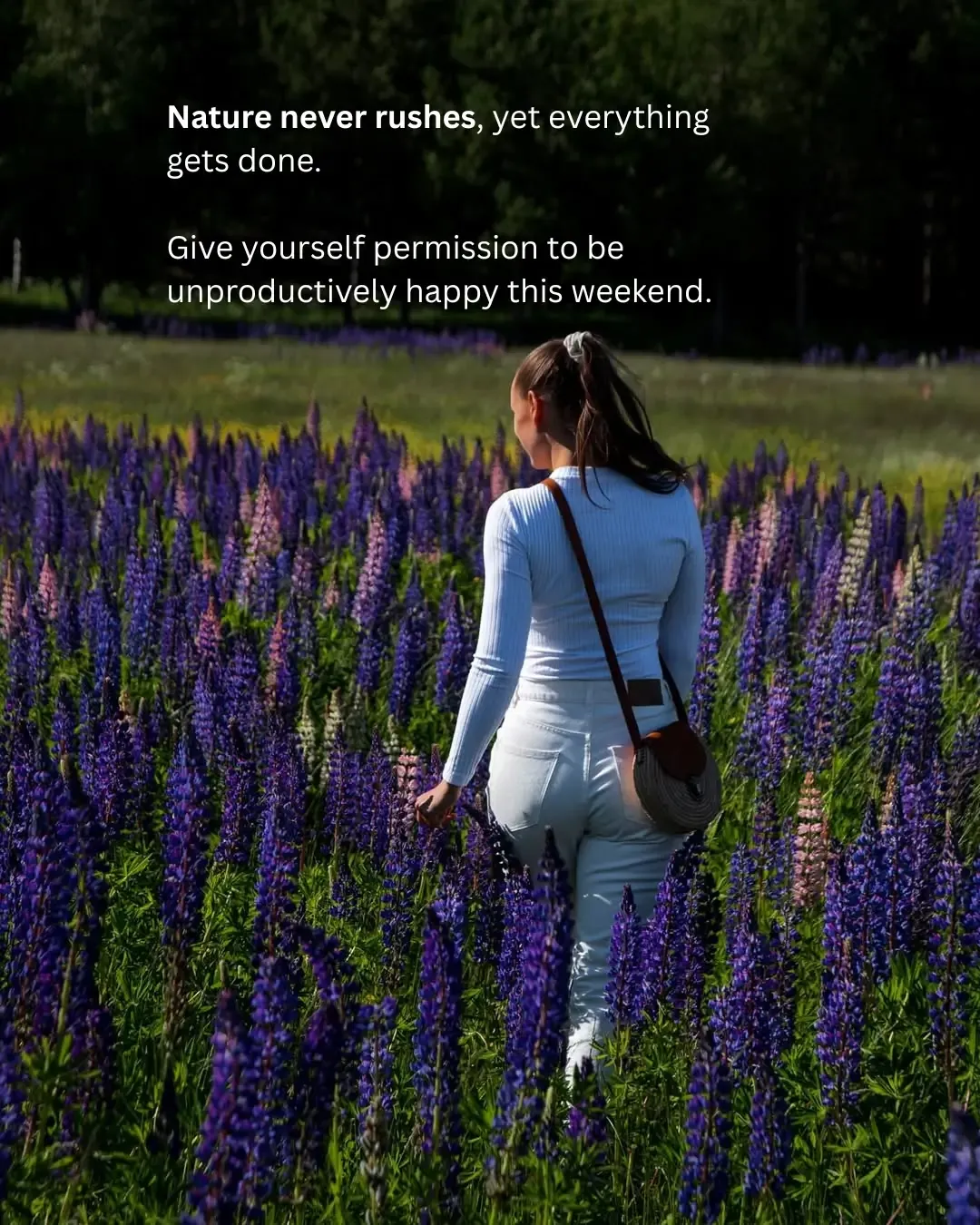
The Slow Travel Repeat Invitation
At Slow Travel Repeat, we believe that true wellbeing is not found in more – it is found in less. Less noise. Less connectivity. Less distraction.
We curate experiences that invite you to step away from the constant hum of modern life.
To be unreachable. To be alone with nature. To discover the peace that comes from being fully present, with nowhere to go and nothing to do.
This is not about deprivation. It is about freedom. The freedom to be still. The freedom to be yourself. The freedom to live every day like on a wellness retreat.
Practical Steps: How to Begin
You do not need to move to a cabin in the woods to experience this freedom (although I can also recommend that, greetings from the forests of Finland where I am currently writing this ;) ). But you can start small.
1. Create a no‑phone hour. One hour each day where your phone is in another room. No notifications, no scrolling. Just you and your thoughts.
2. Spend a night without screens. Read a book. Write in a journal. Sit on your balcony and watch the sky. Notice how your mind settles.
3. Book a weekend without Wi‑Fi. Choose a cabin, a cottage, or a retreat that deliberately disconnects you. Let yourself be unreachable for 48 hours.
4. Walk without a destination. Leave your phone behind. Walk until you feel like turning back. Notice the details you usually miss.
5. Listen to silence. Sit outside. Close your eyes. Listen. What do you hear? What do you feel? What thoughts rise to the surface?
6. Delete one app. Just one. The one you scroll through most. Notice how you feel after a week without it.
This is a quiet, personal revolution against the system that profits from our distraction. Against the noise that drowns out our own voice.
Looking for guided practices: REPEAT Practice Section of Slow Travel Repeat gives simple, practical exercises to start living more meaningful life at home today with guided routines.
You can start for example with a free 5-day online retreat.
Begin Your Disconnection Journey
The invitation is open. Whether you book a weekend retreat, create a no‑phone hour, or simply sit in silence for five minutes, take the first step.
Explore our curated retreats – experiences designed to help you disconnect and rediscover yourself.
Explore the 7 Recommended Digital Detox Retreats
Join our newsletter – monthly inspiration for mindful living & experiences.
Read more Wonderlost journals – thoughts in between modern chaos and a quieter life.
Find ideas how to start with more meaningful life from Slow living

Live every day like on a wellness retreat.
Sini "Sinimalism" Hietaharju
— Slow Travel Repeat
LATEST BLOG POSTS:
WRITTEN BY

Hey there, I'm the Author
I'm Sini, a digital nomad and an enthusiast in slow living, mindful traveling and yoga retreats.
This is your go-to mindful corner of the internet.
I'm here to share my slow travel tips, the dreamiest places, and stories and photographs from my journeys.
I happen to be kind of a professional in this as well, as I have my Master's degree in Tourism Research, and both my master's and bachelor's theses are about wellness travel.
I want to share the hidden gem hotels, dreamiest retreats and mindful destinations, as well as some deeper journals and thoughts on what meaningful life is.
With my job as a Marketing Person for Wellness Businesses , like retreats, I have some great places to share with you on this beautiful globe.
Welcome to dive into your most meaningful journeys - join the newsletter if you want monthly slow travel inspiration.
You can read more about me here.


